The Prevention Project Home

Category

Public Health Investigation

24 articles

Wellness Sold, Prevention Starved: How a Booming Industry Is Leaving Public Health Behind

Wellness Sold, Prevention Starved: How a Booming Industry Is Leaving Public Health Behind

The American wellness industry generates nearly $500 billion annually selling prevention to those who can afford it, while evidence-based public health programs fight for scraps of government funding. This investigation examines the growing chasm between commercial wellness and community prevention—and who pays the price when only one of them is profitable.

Where Prevention Never Arrived: The Geographic Divide in America's Health Infrastructure

Where Prevention Never Arrived: The Geographic Divide in America's Health Infrastructure

Across wide stretches of rural America and within neglected urban corridors, the basic infrastructure of preventive health — clinics, screening programs, community health workers — simply does not exist. This investigation maps the contours of America's prevention deserts and examines how their absence compounds health inequities across generations.

Wellness as Status Symbol: How America Learned to Pay for the Wrong Kind of Health

Wellness as Status Symbol: How America Learned to Pay for the Wrong Kind of Health

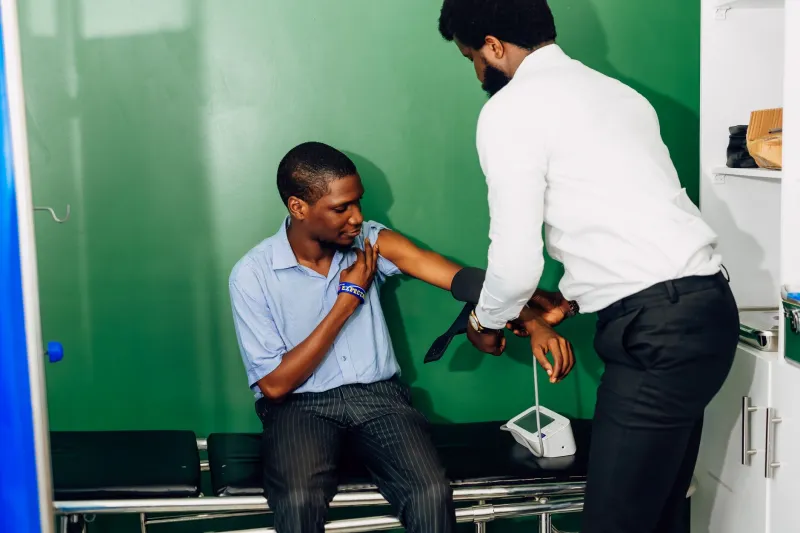
Millions of Americans willingly spend hundreds of dollars each month on boutique fitness classes and premium supplement subscriptions, yet consistently decline free or low-cost blood pressure screenings that could detect life-threatening conditions before they become irreversible. This investigation examines the cultural and psychological architecture behind one of American public health's most self-defeating contradictions. Understanding why prevention has been repackaged as a lifestyle luxury

Treating What We Could Have Prevented: The Trillion-Dollar Trap at the Center of American Healthcare

Treating What We Could Have Prevented: The Trillion-Dollar Trap at the Center of American Healthcare

The United States spends an estimated ten times more managing chronic diseases like diabetes, heart disease, and obesity than it invests in preventing them — despite overwhelming evidence that prevention is both more effective and dramatically less expensive. This investigation examines the structural incentives that have locked American healthcare into a treatment-first economy, and asks what it would take to finally reverse course.

Fear the Rare, Ignore the Routine: How Misplaced Health Anxiety Is Killing Americans

Fear the Rare, Ignore the Routine: How Misplaced Health Anxiety Is Killing Americans

Americans pour extraordinary emotional energy and public funding into diseases that affect relatively few people, while the conditions most likely to end their lives receive comparatively little attention or behavioral response. This investigation examines the psychological and media forces that distort our collective sense of health risk — and what it costs us in lives lost to entirely preventable causes.

Algorithmically Reassured: How Digital Health Tools Are Quietly Undermining Preventive Care

Algorithmically Reassured: How Digital Health Tools Are Quietly Undermining Preventive Care

Millions of Americans now consult symptom-checker apps and AI-driven health platforms before — or instead of — scheduling time with a physician. While the promise of digital health tools is genuine, mounting evidence suggests that algorithmic reassurance is cultivating a form of medical complacency that delays early intervention and erodes the patient-provider relationship at its most critical juncture.

Cheap Cures We Never Take: The Behavioral Economics of Choosing Illness Over Prevention

Cheap Cures We Never Take: The Behavioral Economics of Choosing Illness Over Prevention

Americans collectively spend trillions managing chronic diseases that, in many cases, were preventable at a fraction of the cost. Understanding why individuals and institutions persistently choose expensive treatment over affordable prevention requires looking beyond logic — and into the psychology, incentives, and cultural stories that quietly govern our health decisions.

Invisible and Ill: How Chronic Loneliness Became a Public Health Emergency We Refuse to Name

Invisible and Ill: How Chronic Loneliness Became a Public Health Emergency We Refuse to Name

Decades of research now confirm that chronic social isolation carries health consequences rivaling those of smoking fifteen cigarettes a day, yet American public health infrastructure has been remarkably slow to treat loneliness as a preventable condition. This investigation examines the structural blind spots that have kept social disconnection off the national prevention agenda, and the community-level innovators quietly closing that gap.

Counted Steps, Missed Diagnoses: The Illusion of Health in the Age of Wearable Technology

Counted Steps, Missed Diagnoses: The Illusion of Health in the Age of Wearable Technology

Millions of Americans strap on fitness trackers and obsessively monitor their daily step counts, resting heart rates, and sleep cycles — yet the same individuals routinely decline the colonoscopies, mammograms, and lipid panels that could detect life-threatening disease in its earliest stages. This investigation examines the cognitive gap between performance tracking and genuine prevention, and what it signals about the country's complicated relationship with its own health.

When Instinct Overrules Evidence: The Deep Roots of Medical Skepticism in America

When Instinct Overrules Evidence: The Deep Roots of Medical Skepticism in America

Millions of Americans receive sound preventive guidance from their physicians each year — and quietly set it aside in favor of personal intuition or advice sourced from a social media feed. Understanding why this happens requires a careful look at the psychological, cultural, and historical forces that have eroded trust in clinical authority, and what public health advocates can realistically do about it.

Uneven Ground: How America Chooses Which Diseases Deserve a Fighting Chance

Uneven Ground: How America Chooses Which Diseases Deserve a Fighting Chance

Millions of Americans submit to annual mammograms and PSA tests while silently skipping screenings for conditions that claim far more lives each year. The disparity is not random—it is the product of cultural bias, media influence, and deeply embedded psychological shortcuts that shape which diseases we fear and which we forget. Understanding this uneven landscape may be the first step toward a smarter, more equitable approach to prevention.

Storm Shelters and Skipped Checkups: The Paradox at the Heart of American Risk

Storm Shelters and Skipped Checkups: The Paradox at the Heart of American Risk

Americans invest billions in preparing for hurricanes, cyberattacks, and home invasions — yet routinely decline the blood pressure checks and cancer screenings that could save far more lives. A closer look at the psychology of risk perception reveals why public health advocates must fundamentally rethink how they communicate the threat of chronic disease.

Cured by Authority: How America's Faith in the Fix Undermines the Case for Prevention

Cured by Authority: How America's Faith in the Fix Undermines the Case for Prevention

Americans consistently place greater trust in a physician's prescription than in the daily habits that might render that prescription unnecessary. This investigation examines the psychological, cultural, and structural forces that elevate reactive medicine above proactive health stewardship — and what it will take to rebalance that equation.

Cured at Any Cost: How America Learned to Pay a Fortune to Avoid Paying Nothing

Cured at Any Cost: How America Learned to Pay a Fortune to Avoid Paying Nothing

Americans collectively spend trillions treating diseases that, in many cases, could have been intercepted at a fraction of the cost. A convergence of insurance incentives, pharmaceutical influence, and deeply embedded cultural beliefs has made reactive medicine the default — and prevention the afterthought. This investigation examines the structural forces that sustain a system most experts agree is working against the very people it claims to serve.

Spending Big to Suffer Later: The Irrational Economics of American Health Choices

Spending Big to Suffer Later: The Irrational Economics of American Health Choices

Americans routinely absorb five-figure hospital bills without question yet balk at a $150 annual wellness visit. A growing body of behavioral economics research reveals the deeply ingrained psychological and structural forces that make crisis spending feel inevitable while preventive investment feels optional—and the consequences for public health are severe.

Knowing Is Not Enough: The Science Behind Why Health Awareness Rarely Becomes Action

Knowing Is Not Enough: The Science Behind Why Health Awareness Rarely Becomes Action

Decades of public health campaigns have successfully informed Americans about the risks of poor diet, inactivity, and skipped screenings — yet behavior change remains stubbornly elusive. Researchers are now uncovering the psychological and structural forces that sever knowledge from action, and a new generation of interventions is proving that awareness alone is never the whole answer. Understanding why people fail to act on what they know may be the most important question in modern preventive

Beyond Access: The Hidden Forces That Keep Americans From Choosing Prevention

Beyond Access: The Hidden Forces That Keep Americans From Choosing Prevention

When cost and geography are removed from the equation, millions of Americans still decline free, readily available preventive care. A growing body of behavioral science research is revealing the deeper psychological and structural forces at work—and challenging public health advocates to rethink everything they thought they knew about driving behavior change.

Screened and Saved: Understanding Why Free Cancer Tests Go Unclaimed

Screened and Saved: Understanding Why Free Cancer Tests Go Unclaimed

Millions of Americans are eligible for no-cost cancer screenings yet decline to schedule them. Researchers and community health workers are uncovering the complex web of psychological fears, logistical obstacles, and systemic mistrust that stands between a free test and a potentially life-saving diagnosis.

Waiting for the Alarm: The Hidden Cost of America's Symptom-First Health Culture

Waiting for the Alarm: The Hidden Cost of America's Symptom-First Health Culture

Millions of Americans forgo routine screenings each year, choosing instead to seek care only after symptoms appear — a pattern that costs lives and billions of dollars annually. Researchers and clinicians are now asking a difficult question: why does a nation with widespread access to preventive services still treat medicine as a last resort? The answers reveal a complex web of psychology, systemic design, and deeply ingrained cultural habits.

America's Quiet Epidemic: The Alarming Decline in Preventive Health Screenings

America's Quiet Epidemic: The Alarming Decline in Preventive Health Screenings

Millions of Americans are quietly forgoing the routine screenings that could detect life-threatening conditions before they become irreversible. A convergence of financial strain, systemic distrust, and fragmented healthcare access is driving this dangerous trend—and the consequences are already rippling through emergency rooms and chronic disease wards nationwide.